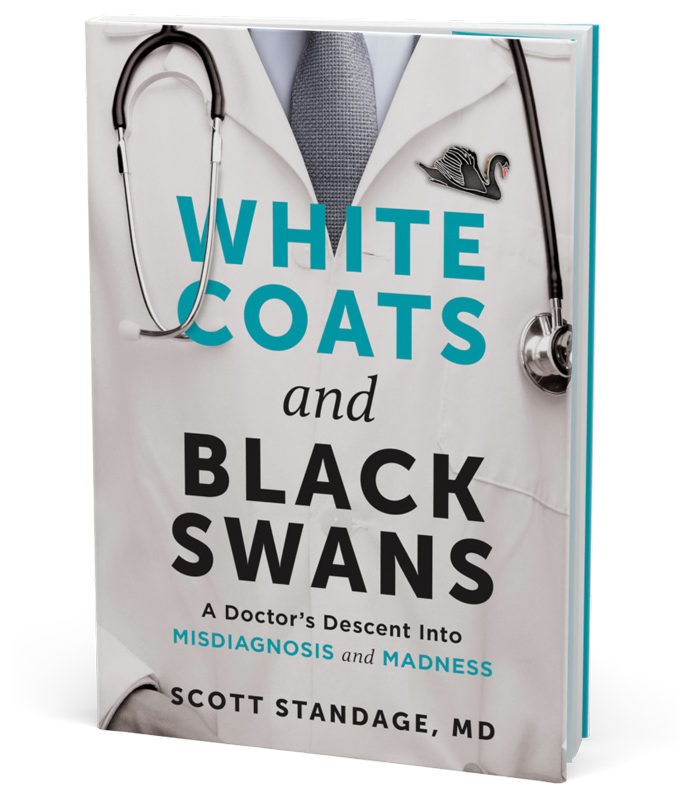
About the Book
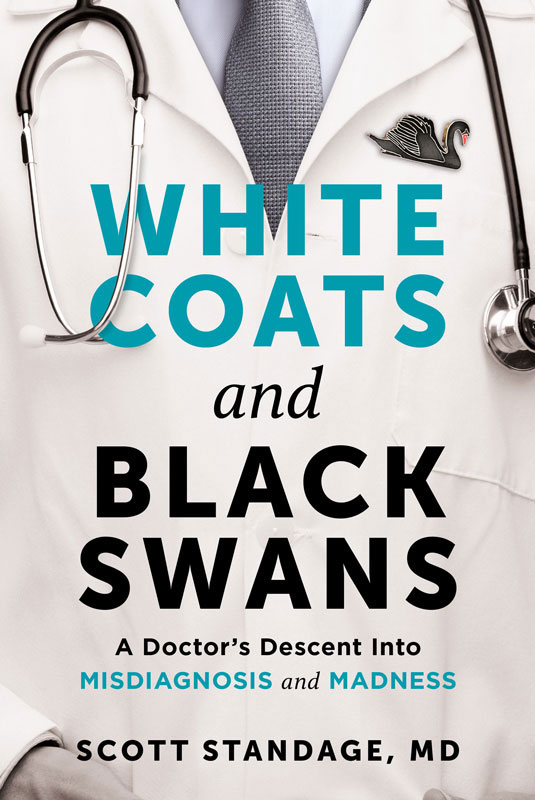
When Dr. Scott Standage sought treatment for a sleep disorder, he entered the medical system as a Stanford-trained, board-certified physician—and emerged from it as a psychiatric patient.
Testing had identified severe obstructive sleep apnea, but that finding was disregarded out of hand. Instead, Scott was diagnosed with a very rare neurologic condition—periodic limb movement disorder (PLMD)—and prescribed powerful psychoactive medications that radically altered his behavior, but didn’t treat his OSA or address his mistaken PLMD diagnosis. Rather than recognizing his deteriorating condition as a possible consequence of medication side effects and untreated sleep apnea, his doctors diagnosed him with bipolar disorder and prescribed still more psychoactive drugs.
Once that diagnosis entered his medical record, it became the chart—and the chart became the truth. Each new physician read the record before reading the man. Scott’s insistence that the diagnosis was wrong was treated not as evidence worth investigating, but as further proof that he was mentally ill and in denial.
The resulting cascade led to eight involuntary psychiatric hospitalizations, profound personal isolation, and the derailment of his medical career. Only after years of escalating treatment did Scott uncover what had happened, recover his health, and achieve legal vindication.
White Coats and Black Swans is both a medical memoir and a warning about the systems that allow an initial error to become self-reinforcing. It exposes the dangers of diagnostic anchoring, prescribing cascades, and medical records that acquire more authority than the patients they describe.
If the system can break one of its own, what happens to the rest of us?
Do Know Harm: A Doctor’s Own Diagnosis Dismissed.
18 Meds. 8 Involuntary Holds. He Was Right.
About the Author
Scott Standage, MD, is a Stanford-trained, board-qualified specialist in physical medicine and rehabilitation (PM&R) with over two decades of clinical experience in musculoskeletal and neurological rehabilitation. He has practiced at leading institutions, including Stanford and Santa Clara Valley Medical Center, and he currently sees patients at an outpatient clinic in San Jose, California.
But his most important credential was never framed on a wall. Scott is a survivor. Misdiagnosed and treated with massive doses of powerful psychiatric medications for what was actually a sleep disorder, he endured years of medical maltreatment that cost him his career, his reputation, and nearly his life. His recovery and his legal victory in a malpractice case gave him something few physicians ever have: the view from both sides of the chart. Doctor and patient. Healer and harmed. Ultimately, he self-diagnosed and rescued himself.
Today, he is a vocal advocate for diagnostic reform, mental health accountability, and evidence-based treatment pathways. He reminds his colleagues and patients alike that a diagnosis should be a road map to healing, not a life sentence. If misdiagnosis can happen to a physician fluent in the language of medicine, it can happen to anyone.
Sign up to receive email updates from Scott and receive a free excerpt from White Coats and Black Swans.
By submitting this form, you are consenting to receive marketing emails from Dr. Scott Standage.
Praise
“White Coats and Black Swans feels like the film Memento trapped inside an episode of The Pitt for the prior-authorization generation, where every doctor insists that the chart matters more than the patient. A terrifying reminder that one bad diagnosis can turn your entire life into a reality you no longer recognize.”
Matthew Zachary, author of We the Patients: Understanding, Navigating, and Surviving America’s Healthcare Nightmare
“A detailed account of a cavalcade of medical missteps leading to years of misery, White Coats and Black Swans is a poignant, cautionary memoir.”
Foreword Clarion Reviews
“A heart-wrenching view into the complex and often imperfect patient experience. Dr. Standage shares his personal journey in vivid detail, allowing a rare glimpse into the collisions between patients, doctors, the pharmaceutical industry, hospital systems, and broader society.”
Brendan McCarthy, MD, ophthalmologist at Harvard Medical School
“A genuinely disturbing portrait of how quickly competent care can curdle into catastrophe. A furious and exhaustively detailed indictment of medical arrogance packaged as a survival story.”
Kirkus Reviews
“Dr. Scott Standage bravely shares his deeply personal story about the devastating consequences of overlooking a differential diagnosis. If such a critical mistake can happen to an experienced physician in the heart of Silicon Valley, it serves as a powerful reminder that it can happen to anyone.”
Katharine Ball, MD, Palo Alto Medical Foundation
“We, as physicians, are extraordinarily privileged to obtain all the training and knowledge from those who came before us and have the power to use it to help others. [What happened to Dr. Standage] is a complete dereliction of duty by all those complicit in his ordeal.”
David Kassel, MD, FACC, board-certified in cardiovascular disease and internal medicine
“Scott Standage spent eight years training to become a physician and six months losing his mind to one. . . . A thriller, exposé, or warning label for anyone who trusts the prescription pad.”
San Francisco Book Review
Media
As Seen In:




Dr. Scott Standage is available for interviews, features, book events, speaking engagements, and appearances. In an interview, he can speak to the following topics:
- When medication side effects look like mental illness: How psychoactive drugs can produce symptoms that are then mistaken for evidence of a new psychiatric disorder.
- How one wrong diagnosis becomes a cascade: Why diagnostic anchoring can lead clinicians to reinterpret every new symptom as confirmation that the original diagnosis was correct.
- What happens when doctors trust the chart instead of the patient: How medical records acquire authority—and why correcting an inaccurate diagnosis can become extraordinarily difficult.
- Why medical hierarchy allows errors to compound: How fragmented care, professional deference, and reluctance to challenge previous clinicians can turn a treatable condition into a crisis.
To book the author, please contact Cathy Lewis at cslewispublicity@gmail.com.
Connect
Have questions about White Coats and Black Swans?
Contact Scott using the form below.